Online music lessons
One idea. A few notes. Your own music.
Composition is a subject in its own right, open to ideas from different traditions. It is not a subcategory of Western music.
Start with an idea you can hear
A sung motif, a short melody or a rhythm can be a starting point. We can examine what makes the idea recognisable: contour, repetition, note lengths and silence. You do not need a finished song to ask a question.
Melody, rhythm, harmony and form
Compare two endings for a phrase, transform a motif or hear how a chord change alters a melody. Form then helps organise ideas: return, contrast, transition and conclusion. Theory stays connected to what you can sing, play and hear.
Use your voice or instrument as a starting point
Singing, guitar, piano or keyboard, harmonium, bansuri and ukulele offer different possibilities. We choose an approach suited to your playing rather than promising that every idea works on every instrument. Mention your reading and theory experience when enquiring.
What these lessons cover — and what they do not
I teach music composition, singing and the instruments listed on the site. I do not offer production, arrangement, mixing, mastering or DJing lessons. You do not need production software simply to discuss your project.
An idea workshop: change just one thing
Imagine an original four-note motif. Repeat it, then change only its final note to compare two endings. Next keep the pitches but alter a duration or silence. Isolating one parameter helps you explain what you prefer and why, instead of collecting ideas without knowing which one carries the piece.
This is a possible task, not a fixed curriculum or a promise to compose a song in one session. If using chords, ask whether they support the motif or obscure it. An idea can remain a single melodic line: adding harmony is not compulsory for it to have form and intention.
Keep versions and listen for the difference
Give each attempt a simple name: motif A, changed ending, lighter rhythm. Personal notation or a short private recording can help you remember; publication is unnecessary. Then choose two versions, hear them a few minutes apart and note one specific difference.
For the first conversation, say whether you want to write an instrumental melody, an original song or explore structure. Bring only material you have the right to share, and do not present a copied melody as your own creation. Lessons address musical choices; commercial release and legal questions need their own checks.
Prepare your inquiry
Mention your instrument, experience and an idea you would like to develop. Lessons are live on Zoom in English across France. Availability and format need direct confirmation; opening a message draft does not book a lesson.
Music and practice in pictures
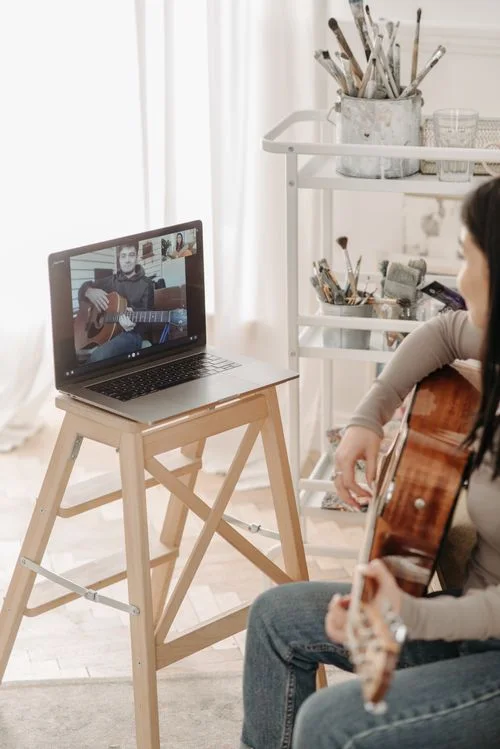
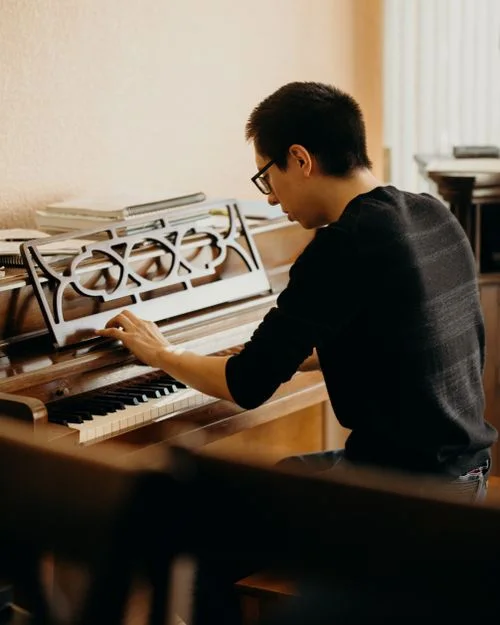
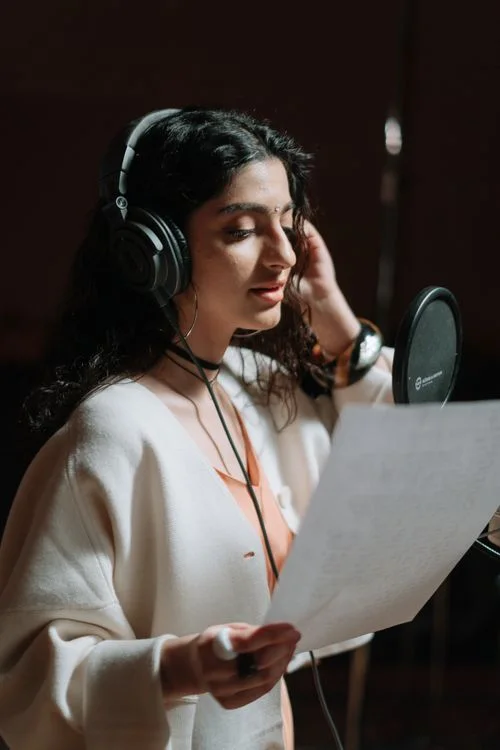
Licensed illustrative photographs; these do not depict the teacher or his students.
Ready to start?
One free 15–30-minute one-to-one introductory session before enrolment. This is not a regular paid class or a group trial.
You can contact Dr Banerjee directly by WhatsApp, email or a phone call. No form is compulsory.