
Editorial guide · France
Harmonium for beginners: where to start
Date:
Updated
Harmonium for beginners starts with understanding two separate actions: supplying air and choosing notes. A hand-pumped Indian harmonium looks like a small keyboard, but its operation and musical uses are not simply those of a miniature piano.

1. Identify the instrument
This guide concerns the hand-pumped Indian harmonium. Historical pedal-operated instruments also exist. Before buying or hiring, check the type, bellows condition, key response and possible air leaks with knowledgeable help.
Reed sets, drones and transposing mechanisms vary. More controls do not automatically make a better first instrument: reliable operation and clear guidance are more useful starting points.
2. Separate bellows and keyboard work
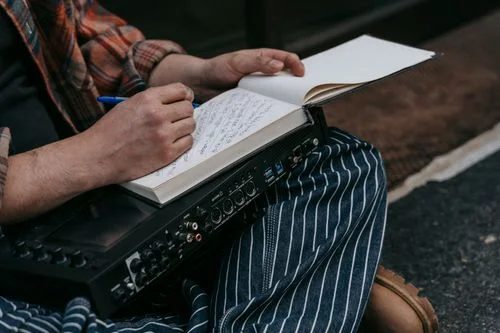
First understand how to maintain an even supply of air without abrupt movements. The other hand should eventually move on the keyboard without the bellows taking all your attention. Adjust seating and height so you do not lean excessively.
As a general listening activity, try a single sustained note followed by silence. This is not a prescribed exercise from this teacher: ask for an adaptation to your instrument and stop if the movement causes pain.
3. Connect keys with listening
In Indian contexts, sa, re, ga, ma, pa, dha and ni provide note syllables; sa is a chosen tonic, not necessarily Western C. Learn positions through listening as well as visual landmarks rather than relying only on stickers.
Harmonium can support a sung line, but fixed keys do not reproduce every vocal inflection or glide. Listening to performers remains important, especially when exploring a raga.
4. Choose a musical context
Do you want to accompany singing, explore melodies or understand the link between voice and pitch? These aims guide repertoire and initial instructions. They do not make different Indian traditions interchangeable.
The Metropolitan Museum’s introduction to instruments of the Indian subcontinent provides wider cultural context. Read it alongside our raga guide, then ask which subjects are actually offered.
Describe the instrument before looking for a method
Before a purchase or first inquiry, record what you know about the harmonium: key condition, bellows access and stable placement. If the model is unknown, say so. Describing what works or causes difficulty is more useful than guessing terminology. Illustrative website photos do not designate a compulsory model.
Consider framing in actual playing position. The screen support must not obstruct bellows movement, and you should see the teacher without twisting. Check sound at normal volume too; an instrument audible in the room may reach the microphone incompletely.
Separate bellows, keyboard and listening difficulties
Organise questions around three observations: producing steady sound, finding a key and recognising whether the sound matches your intention. A person may struggle in only one area. This general distinction is neither diagnosis nor a guaranteed lesson sequence; it helps explain what needs understanding.
If a key fails to respond or air seems to escape abnormally, do not automatically compensate with force. Describe the problem and seek appropriate instrument advice. Avoid dismantling a mechanism based on a general article; learning to play and repairing an instrument are separate tasks.
To understand an uneven harmonium sound, first listen to one sustained note rather than a whole song. If the sound varies, observe the relationship between bellows movement and the key without forcing the mechanism. If the note stays steady but the passage breaks during key changes, that is a different problem to discuss. Separating them avoids buying another instrument or speeding up the fingers to compensate for a difficulty you have not yet identified.
Frequently asked questions
Do I need access to a harmonium?
An instrumental subject requires access to its instrument; discuss equipment before buying.
Does every learner follow an identical programme?
No specific programme is guaranteed. Tell the teacher your level and goal.
Is a key problem always a playing difficulty?
No. Instrument condition may be involved. Describe the issue and avoid modifying the mechanism without suitable competence.
Official resource and context
Plan your next step
Separate bellows control from a melody problem: bring one concrete observation to the first conversation.
One free 15–30-minute one-to-one introductory session before enrolment. This is not a regular paid class or a group trial.
Instruments · About the teacher
The form prepares a WhatsApp or email draft for you to send yourself. Opening a draft does not confirm a booking.
Continue reading
Photographs illustrate the topics; they do not show students, compulsory equipment or brand endorsements.