
Editorial guide · France
A 20-minute practice routine for beginners
Date:
Updated
A 20-minute practice routine can help you avoid spending every session restarting a piece from the beginning. This is a general framework, not a prescription or a programme attributed to the teacher. Adapt it to your level, energy and current instructions.
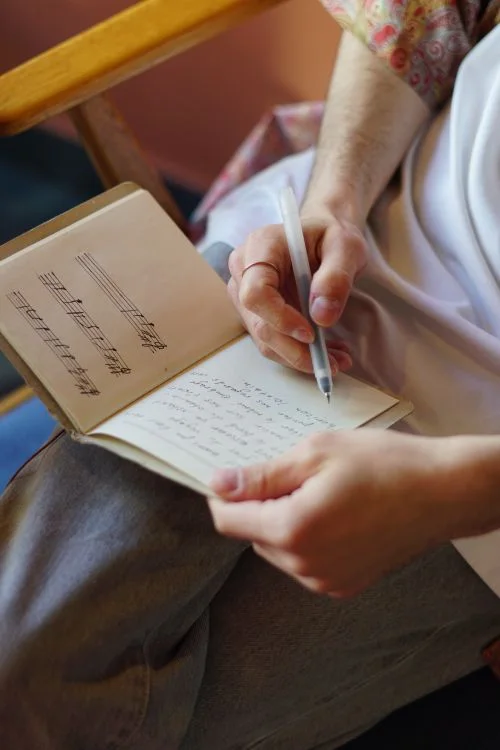
Minutes 0–3: settle in and listen
Prepare the instrument, music or lyrics and seating. Check tuning where needed. Set one small task: a chord change, two bars or a short phrase, rather than the vague goal of playing better.
Listen to a reference you may lawfully use, or recall the instruction. For singing, do not invent an intense warm-up: stay in a comfortable range and follow guidance suited to your voice.
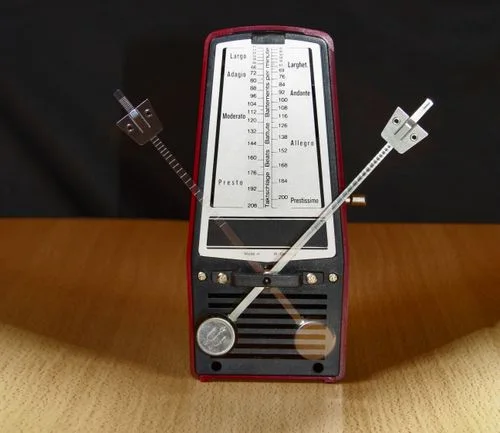
Minutes 3–8: isolate one difficulty
Work on the smallest passage containing the problem. Slow down or simplify one element. Listen after each attempt: which note, movement or moment is unclear? Repetition without observation gives you no basis for choosing a correction.
Use a slow pulse if helpful, but the metronome is not a test. If keeping up makes you tense, simplify or stop the activity.
Minutes 8–15: reconnect and vary
Join the passage to what comes before and after. Sometimes start elsewhere to check that you do not depend entirely on the opening. Keep a speed that lets you hear what you are doing.
If the task is still too difficult, return to a shorter version. Breaking music down is a tool; it does not replace listening to a complete phrase or enjoying the music.
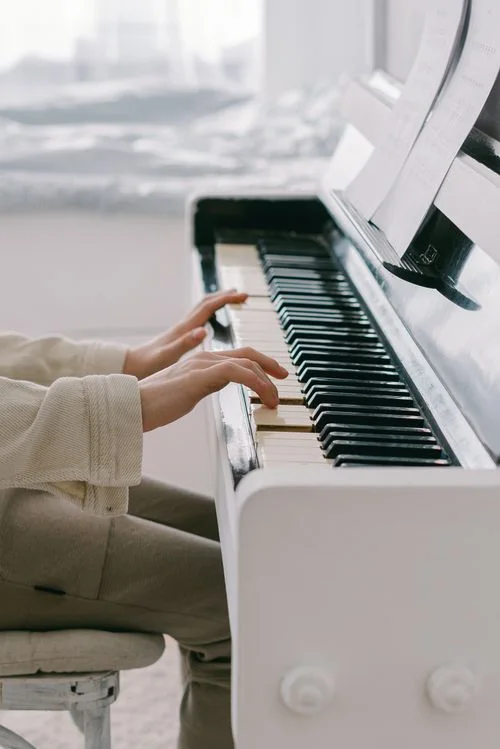
Minutes 15–20: play and note the next step
Spend a few minutes on a short musical version of your work, then note what changed and what to ask next time. “I lose the pulse at the second change” is more useful than “I am hopeless”.
Twenty minutes is neither a compulsory minimum nor a guaranteed result. Take breaks and shorten the session when necessary. ABRSM’s official piano resources provide other practice ideas; choose suitable ones with a teacher.
Example: one difficult transition rather than the whole piece
Consider a hypothetical situation: one transition makes you lose the pulse. For focused work, choose a fragment starting before that transition and ending just after it. Notice whether difficulty always appears in the same place. You seek an actionable observation rather than the greatest repetition count in five minutes.
When reconnecting, return to a slightly longer phrase. If consistency disappears, the isolated fragment may not yet represent the whole difficulty. Reduce the task or frame a teacher question. This example explains a general routine; it prescribes no exercise for every instrument or for Dr Banerjee’s lessons.
A review sheet that changes the next practice session
Finish by noting what you tried, what changed and what remains uncertain. One line each is enough. “Three slow attempts, steadier start, difficult return to the full phrase” says more than a mark out of ten or a general talent judgment.
Next time use that note to choose a starting point instead of automatically returning to bar one. Adapt duration if tired or uncomfortable. The review sheet implies neither compulsory message support nor a promise that a teacher will read it outside lessons.
At the end of twenty minutes, write one actionable sentence: ‘the change stays clean slowly, but the pulse stops when I look at my hand’. This lets you resume without repeating the whole investigation. Avoid vague reports such as ‘bad today’. If you only have five minutes tomorrow, choose one action from that observation. Reducing session length does not mean speeding up the piece; it means reducing the task’s size.
Frequently asked questions
Do twenty minutes guarantee a result?
No. The routine is an organisation example, not a progress guarantee.
Should I practise through pain?
No. Stop if painful and seek appropriate advice if it persists.
What should I record after twenty minutes?
Keep three things: what you tried, what changed and what remains uncertain for next time.
Official resource and context
Plan your next step
Keep a note that informs the next session: bring one concrete observation to the first conversation.
One free 15–30-minute one-to-one introductory session before enrolment. This is not a regular paid class or a group trial.
Instruments · About the teacher
The form prepares a WhatsApp or email draft for you to send yourself. Opening a draft does not confirm a booking.
Continue reading
Photographs illustrate the topics; they do not show students, compulsory equipment or brand endorsements.