
Editorial guide · France
How long does it take to learn guitar?
Date:
Updated
How long does it take to learn guitar? It depends on whether you mean playing a few chords or performing a piece steadily. Those are different goals. There is no universal deadline; define what you want to do before measuring progress.

Marker 1: produce a clear sound without forcing
Start with one note or a simple chord. Listen to the strings separately: a muted note gives useful information about placement. Trying again slowly is more useful than squeezing harder without understanding the problem.
An uncomfortable setup or unsuitable size can make the beginning harder. Ask for advice about the instrument. Persistent pain, numbness or marked tension should not be treated as training targets.
Marker 2: keep the pulse
Choose a short rhythm before adding speed. Count aloud or use a slow metronome; the aim is to find where you lose the pulse, not to match a recording at any cost.
When you add a chord change, simplify the rhythm if necessary. Two simultaneous difficulties often make an error harder to understand.
Markers 3 and 4: connect positions and play a phrase
Practise only the movement between two positions, then put it into a short phrase. Notice whether you can resume without checking every finger. Measure steadiness and comfort, not just the number of chords you know.
A simplified song can be a useful project, but that is not the same as playing the original arrangement. Ask which version fits your current work.

Why timescales vary
Practice frequency, attention, previous experience, instrument setup and musical difficulty all affect the journey. A short focused session may be more useful than a long period repeating the same errors.
ABRSM’s official guitar information provides formal levels and repertoire to explore. It does not give a mandatory timescale for reaching them, and you do not need an examination to enjoy guitar.
Keep an attempt log instead of a countdown
Choose a short describable task and note what happens over a few attempts. A general example is following a pulse while moving between two familiar positions. The purpose of personal observation is not accumulating repetitions: consider whether difficulty lies in timing the change, finger pressure or the complete sequence.
Record the date, task and a neutral observation: “the change falls after the pulse” is more specific than “I am bad”. This log neither replaces teacher feedback nor defines compulsory progress. It helps compare the same action rather than judging all your playing each time.
Decide what to change when a passage stays difficult
If nothing becomes clearer, do not automatically practise longer. Check tuning, instrument comfort and passage size. Equipment trouble or an overly broad task can feel like a musical block. Avoid structural guitar adjustments without suitable competence.
Then bring a specific question: when does consistency disappear, and what have you tried? No number of plans or weeks guarantees an answer. A better reference is understanding an observed action more clearly with sustainable, pain-free practice.
Keep the same tempo when comparing two attempts. Playing faster on the second can hide a useful change: less string noise, a more accurate entry or a better placed pause. You can also count clean transitions in a short sequence instead of measuring how many seconds you last. The aim is not to record daily scores but to choose an observation that helps decide which movement needs attention next.
DR BANERJEE MUSIC · YOUTUBE
Listen, then play: a Lydian guitar exercise
This Dr Banerjee Music video presents a Lydian exercise with tablature and audio. It is optional listening to explore after the first foundations, not a level promise or a compulsory first-day exercise.
One demonstration. One listening focus.
No YouTube player or thumbnail loads before you click. Loading the video connects you to YouTube, which may process data under its privacy rules.Google privacy.
Listen without playing first. Then choose a very short fragment to practise slowly if the fingering is suitable. Stop if your hand tightens; ask for an adaptation rather than copying the demonstration speed.
Frequently asked questions
Can learning be guaranteed within a number of weeks?
No. Starting points, individual practice and goals vary.
Are lessons only for beginners?
No. Offered subjects range from foundation to advanced level.
What should I note after a guitar attempt?
Record the task, one precise observation and the remaining question rather than judging talent from a difficult session.
Official resource and context
ABRSM classical guitar information: one formal pathway, not a guaranteed progress timetable.
Plan your next step
Recognise improvement without speeding up: bring one concrete observation to the first conversation.
One free 15–30-minute one-to-one introductory session before enrolment. This is not a regular paid class or a group trial.
Instruments · About the teacher
The form prepares a WhatsApp or email draft for you to send yourself. Opening a draft does not confirm a booking.
Continue reading
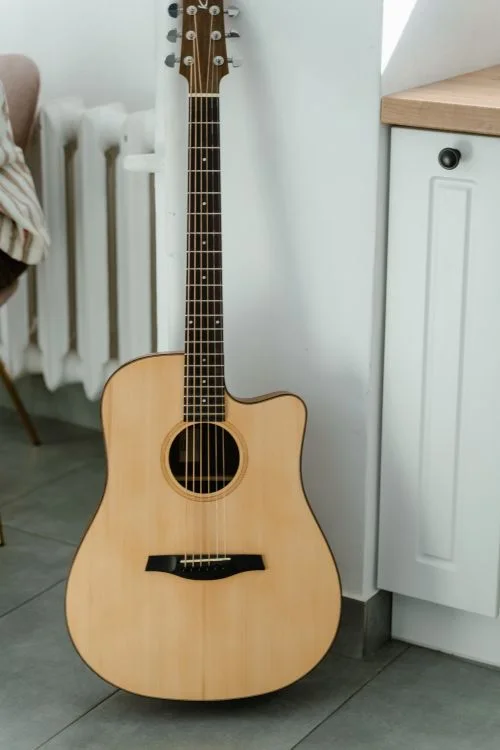
Photographs illustrate the topics; they do not show students, compulsory equipment or brand endorsements.